Friday, December 10, 2021

#4 - What's in the Box?

 This guy (ZS1I) is getting like the YouTube video posters with his "What's in the Box?"  I received several requests to please continue with the series "What's in the Box?"  From all accounts these postings were of great interest to some of the readers of the GRHub Network Blog.  I will oblige in this regard and will from time to time post images and information of what is in the boxes I receive.  I am also looking at providing a review of equipment, components, modules etc.  I have not yet decided in which format to publish these reviews.  It will either be done on this blog or via a YouTube channel.  Now I must say I do not regularly buy items via the Internet.  So do not expect many posts in this regard.  Some of the equipment in the boxes is not new so do not expect the latest amateur radio state of the art equipment to be unboxed.

I had the privilege to buy the item in the box from Dirk ZS1DRK  and would like to thank him for making it available.  I have now bought  three radios from him, all of them in a as new condition.  Very well looked after radios.  Thanks, Dirk.

Before I reveal what is in the box, I must express my opinion about the general concept that this item is not amateur radio.  I have said it before.  I use any equipment to communicate with and have no prevalence's whether it is "pure" amateur radio equipment or not as long as I can communicate and enjoy myself, then I am happy to use anything even an old heliograph 

For those purist of the pure this is well worth a read:  Click HERE

Lets get cracking in unboxing this item:  (Click on images for larger view.)


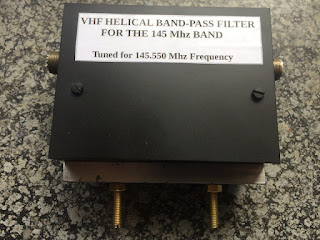
 Finally:  I will provide more information and test results in a future post about this Network Radio.  I bought it for a special purpose that will also later be revealed.  This network radio will be of great assistance in monitoring the GRHub Network and will enhance the functions of the network even further.

Update: Young and New Radio Amateur takes radio (bull) by the horns!!


I am grateful to report that my fellow radio amateurs definitely has the young/new radio amateur at heart. The above topic is now the all time most viewed topic on the GRHub Network Blog. In my opinion this show that there is great interest in what new radio amateurs are up to, be it exploring or experimenting. In my opinion the Elmer concept need to be re-implemented and expanded in South Africa if not active. Feedback on elmering is a must as others will be able to learn from this concept.

Elmer - “Someone who provides personal guidance and assistance to would-be hams and also to hams that are seeking personal assistance in specific areas of the amateur radio hobby.” - N2QOJ.

We should compile a country wide list of radio amateurs that have volunteered to be "resources" to our amateur radio community in South Africa. These Elmer volunteers should be available as personal mentors/coaches in areas of the amateur radio hobby. They must guide the would-be and already radio amateur to how to best approach and solve a technical or amateur radio problem. These Elmers must each have reached a level of subject matter expertise that identifies them to us as "Elmer".  More on this in a future post.

In the mean time lets assist and Elmer those who need assistance.  This way we will prevent new- and existing radio amateurs to fall along the way-side.  This would ensure growth and the future of amateur radio in South Africa!!

Wednesday, December 8, 2021

History of the first 145.600 Mhz Danabay Repeater in Mossel Bay.


First some background relating to repeaters in the Garden Route Area. Circa 1980's there was only one repeater in the area and that was the 145.700 Mhz George Mountain Repeater.  This repeater was a free standing repeater and the only repeater in the Garden Route Area.  The repeater belonged to Eskom but through their kindness radio amateurs could use the repeater.  The repeater worked great but the coverage area excluded large parts of the Mossel Bay district. 

There was definitely a  need for another repeater in the Garden Route Area.  OM Stan Jones ZS1T took it upon himself to obtain and install the first ever 145.600 Mhz repeater in Mossel Bay.  Stan a then member of the Boland Amateur Radio Club resided in George and was for many years the Head of the Radio Technical Division of the South African Police Force in George.  In April 1996 he contacted the then repeater keeper of the Boland Amateur Radio Club and it was not long afterwards that he informed me that he picked up the then Groenberg Repeater on loan to him to install as the 145.600 Mhz repeater in Mossel Bay.  Stan re-tuned the old Storno CQM 600/662 Mobile Radiophone/Professional land mobile tranceiver that was converted to a amateur radio repeater. 


 It originally was a 9-12 Channel Radiophone. By the early 1970's this was state of the art equipment, very well manufactured. In this time period there were only three authorized suppliers of equipment, Storno, Pye and Marconi. The installation typically consisted of a control head, handset and loudspeaker fitted in the front of the vehicle, connected to a transceiver unit usually mounted in the boot connected to a whip antenna. Storno also produced a transportable battery operated version for pedestrian use.The CQM600 with it's stylish remote control head and 'cornet' microphone won a design award in Denmark when introduced. The rugged, waterproof mobile unit was adaptable to a wide variety of applications and included marine and duplex versions. 

Specifications of the Storno Radio courtesy RigPix:

Type:Professional land mobile transceiver
Frequency range
depending on version:
68-88 MHz
132-156 MHz
146-174 MHz
420-470 MHz
Mode:FM
RF Power output:6-25 W
Receiver system:N/A
Sensitivity:N/A
Selectivity:N/A
Image rejection:N/A
Voltage:6, 12 or 24 VDC
Current drain:RX: ? mA
TX: Max ? A
Impedance:50 ohms
Dimensions (W*H*D):? mm
Weight:? Kg
Manufactured:1968-197x (Discontinued)
Other:9 -12 channels, XTAL


 The repeater was tested on the test bench by Stan ZS1T after adding a Low Loss Helical Band Pass Filter on the receive side and a Cavity Filter on the transmit side.  After a few weeks of testing the 145.600 Mhz repeater was ready to be installed on site. The only problem was that there was no site available at short notice to install the repeater on.   Yours truly offered to host the repeater for the interim up high in Heiderand, Mossel Bay at my QTH.  My QTH was situated quite high up on the ridge in Heiderand and would have to suffice until a permanent site could be found.  It was an ideal high interim site,  situated in a quiet area (free of interference then but not today), line of sight to George and in a safe area.

Myself an Stan arranged for the installation of the repeater on a Saturday morning at my QTH.  When Stan arrived I already installed the 5/8 vertical antenna for the receive side.  Stan brought a folded dipole which was installed underneath the 5/8 vertical antenna with enough space between the two to prevent de-sensing. The Band Pass filter was installed on the RX side and a cavity filter was installed on the TX side. The power supply was installed and the repeater was switched on. The necessary final checks and tuning were done.  It was not long before contact was made with Isak ZS2I (Now SK) in Klein Brak River which confirmed great signal strength and audio.  The output of the repeater was tuned down to 10 watt as we did not have a full set of cavity filters for RX and TX.  For the newer generation of radio amateurs this is how repeaters worked in years gone by as cavity filters were scarce as hen's teeth and very expensive if you can find one.

Now to find a suitable high site for the repeater.  Thanks must go to Chris ZS1M who at the time was working for the Mossel Bay Municipality.  He was able to obtain the current site on a water tower at the entrance to Danabay.  This site gave great coverage and is today still used for the current 145.600 Mhz repeater.

The time arrived for the repeater to be moved from my QTH to the DanaBay water tower.  In the mean time Stan ZS1T again came to the rescue with a full set of cavity filters on loan from the Boland Amateur Radio Club.  This would solve the use of two antennas.  We now only have to install one antenna.  We still used the small band pass filter on RX as an extra filter.  The repeater was installed in December 1996 inside the water tower pump room with the folded dipole high up on the top of the tower.  Standing on top of this water tower revealed a clear 360 Deg take off with no obstacles in the way.  To secure the repeater, filters, power supply etc. the repeater was housed in a old computer main frame cabinet that I donated.  This cabinet was ideal as it came with great cooling fans to keep things cool.  This useful cabinet was still used the last time I visited the 145.600 Mhz site.

This repeater function great for several years and I had the privilege of maintaining this repeater on behalf of Stan ZS1T who could not always visit the site. As these Storno Radios are build like tanks, it was not necessary to re-tune them at regular intervals.  From time to time the cavity filters were re-tuned to ensure optimal functioning.

The repeater was enjoyed by many local and visiting radio amateurs from all over.   This was the first 145.600 repeater installed on the Danabay Water Tower,  A few years before the year 2000 the repeater and cavity filters was returned to the Boland Amateur Radio Club as Chris Scarr ZS2AAW and his late father Trevor ZS2AE installed a new 2m repeater, antennas and 70cm link on the Danabay Water Tower which was a great upgrade.  This upgrade amongst others allowed for the 600 and 700 repeater to be linked via DTMF.  This setup functioned  well for many years and was maintained by Chris ZS2AAW and Trevor ZS2AE (SK).

I would like to thank every single radio amateur that was involved in making the first 145.600 Mhz Repeater in Mossel Bay a reality and bringing it to life.  I do not like to mention names as indicated in many of my posts as I might leave somebody out in the cold but I must mention the following radio amateurs, clubs and organizations:

1.  Stanley Jones ZS1T, George

2.  Boland Amateur Radio Club (Members and Committee)

3.  The then repeater keeper of the  Boland Amateur Radio Club (???)

4.  Chris ZS1M, Danabay

5.  Mossel Bay Municipality

6.  All those who assisted and not mentioned in the article

7.  Garden Route Radio Club

Finally:  I would like to plea to the younger and older generation radio amateurs.  Please if you have any information, images and articles on local (SA) amateur radio history make it available for publication and preservation.  You can forward the info to Johan ZS1I by clicking HERE.

Images:  (Click on images for larger view.)

           Coverage of the then 145.600 Mhz Danabay Repeater - Mike Hanslow then ZS1RMS


Satellite and Street Maps Courtesy -  Satellites Pro / Apple Map

Tuesday, December 7, 2021

Project: VHF Low Loss Helical Band-Pass Filter for the 145 Mhz Band


 All credit for this project must go to Mile Kokotov Z33T.  I constructed this filter from his original article, video and images.  I take no credit for any information related to this project other than my test results which I will publish in a future post.

This home made low loss helical bandpass filter for 145 MHz is  tunable from 110 MHz to 160 MHz. Bandpass filters are useful for the RTL-SDR as often strong out of band signals can cause overload, causing poor reception.  I constructed this filter to use with my RTL-SDR. 

 A bandpass filter blocks all signals outside of its pass band. A helical bandpass filter is simply a coiled wire enclosed in a conductive container that can be tuned with a variable capacitor made out of two plates.

Mile  writes:

Basic design of the filter is from RSGB VHF-UHF Manual, but I made some modifications. (Click below on "Show More" for more info) Both Inductors (coils) are made from 6 mm2 copper wire (the wire diameter is 2.6 mm). Coils has 6 turns. Coils diameter is 23 mm Coils Length is 35 mm The tuning capacitors are made from two copper or stainless steel round plates, about 31 to 32 mm in diameter each. (about 760 mm2) One must be very careful using other variable capacitors instead of my suggestions here. There is very high RF voltage on this capacitors. When I was making experiments by using two pieces of RG-58 coaxial cable 16 mm each, as a capacitors (which is about 1.6 pf), and when I applied about 8 watts RF power on 145 MHz, the coaxial cable pieces burned immediately. You can imagine how high RF voltage is present here, because maximum voltage by producer specification for RG-58 coaxial cable is more then 1,4 kV RF Voltage. This Helical Bandpass filter has very low loss. About minus 0.3 dB for the 5 MHz bandwidth and minus 3 dB for 8 MHz bandwidth.

You can use it for improving the receiver front-end by reject out-of-band unwanted strong signals which can make interference and block your receiver, making incapable to receive weak signal of interest.

This filter can also be very useful for rejecting unwanted harmonics signals from your transmitter, making your neighbors happier…

When I connect this filter to my Baofeng UV-5R handheld transceiver, it has improve receiver ability for weak signals in 2 m band dramatically!!! Almost all wide frequency range transceivers suffers from low dynamic range in the receiver front-end. That is because it is almost impossible to made a good RF tracking filter in the front end of the receiver, for reasonable price. Using this bandpass filter for those transceivers/receivers make huge improvement for receiving weak signals, especially in urban area with many strong RF signals.

The signal loss is only 0.3 dB. In other words, when I tested this filter on 145 MHz, and applied 10W RF power from my transmitter through filter to dipole antenna, the signal loss was only 0.7 W. It means that 9.3 W goes to antenna. (7% signal loss). On the receiving mode I can not noticed any signal changes with or without this filter even with the very weak signals, almost buried in the noise.


More info:  HERE

You can see measuring and characterization of this filter: HERE

The images below is my version of this band-pass filter.  I will be testing this filter extensively over a period and will provide my finding in a follow up article:  (Click on images for larger view.)


Sunday, December 5, 2021

Young and New Radio Amateur takes radio (bull) by the horns!!


  On the 28 November 2021 I wrote and article called:  " What happened to all the experimenters and inventors in amateur radio?"   It is a short article where I try to encourage radio amateurs to explore and experiment more in amateur radio.

Now last night (4 December 2021 @ 19h30) a young and new radio amateur from George literally took the bull by the horns and showed that he is up to my challenge to explore and experiment.  Corne ZS1COR lives in George and is an eager new radio amateur that enjoy exploring and experimenting with different aspects of amateur radio.  To the older radio amateurs, does this sound familiar?   To cut straight to the bone we had a ball of a time last night on the GRHub Network. The following radio amateurs were involved:  Corne ZS1COR,  Chad ZSCJ and yours truly ZS1I.  The following equipment and systems were used to explore and experiment with:

  • ZS1COR - Icom IC-E208 VHF/UHF Dual Band Radio fitted with a Yagi antenna.
  • GRHUB Network - 145.550 Mhz Motorola Radius VHF Link Radio fitted with a Diamond X50 Dual Band Antenna.
  • GRHUB Network - AllStar Nodes 49355 + 46765.  The 49355 node is linked to the 145.550 Mhz Link Radio and also accommodate the Echolink Gateway
  • GRHUB Network - Echolink Gateway  ZS1I-L - GRHub Network
  • PEARS IRLP Node 8662 - The node is hosted at the Mount Road site. This node permits the implementation of VOIP over IP for repeater access to the 145.650 Mhz town repeater and allows international repeater access by licenced radio amateurs. Echolink Gateway ZS2PE-R - PEARS Network.
  •  PEARS 145.650 Mhz Town Repeater able or link to 438.650 Mhz PE UHF link and the Lady Slipper repeater.
  • ZS2CJ - Either Echolink program or VHF/UHF RF Radio to access the ZS2PE-R Repeater.

Now before I explain the aim of this specific experiment, I would like to mention that some might see this as simple and general practice used by many radio amateurs and repeater custodians on a daily basis.  I agree but what must be taken into consideration in this experiment is that it was undertaken by a fairly new radio amateur to which all the systems mentioned above could be quite daunting and intimidating if you have never used or accessed the systems, networks and links.  Then there is also the possibility that all the keying of tones could be annoying to many older radio amateurs.  Remember when you fist started out in amateur radio how you might have been "afraid" to do anything that could annoy others or you try something and it works but you cannot switch it back to its original state or even worse you might cause unintentional interference.  We all started out in amateur radio - never forget your first contact in amateur radio.

In this experiment Corne ZS1COR wanted to connect to the PEARS ZS2PE-R via the GRHub Network using his Icom IC-e208 RF Radio, DTMF tones and his Yagi antenna.  I provided Corne with the necessary connect and disconnect DTMF codes.  Now before you shout this is as easy as eating pie, remember that the DTMF tones had to follow through all the above mentioned systems/networks.  Now just imagine how many factors play a vital roll in getting the tones through to the ZS2PE-R repeater.  I will not go into all the factors here other than to mention that the time sequence had to be spot on as well as conditions on 2 meters between George and Mossel Bay etc. etc.

In the first attempt at 20h05 SAST, Corne ZS1COR was not successful to connect but the second attempt was spot on and Chad ZS2CJ responded by confirming the connection status.  Yours truly monitored the experiment on AllStar the Echolink Gateway as well as on MobaXterm.  I could hear the excitement in the voice of Corne ZS1COR as he explains to Chad ZS2CJ what he is trying to achieve.  While the two of them chatted away my thoughts traveled back in time many years ago when I was a newbie trying to experiment with Packet Radio and the then ZS0DLD BBS.  It brought back fond memories of how I received assistance from many radio amateurs in this regard.

I was brought back to reality when Corne ZS1COR announced that he would like to try a disconnect to the ZS2PE-R Echolink Node.  After several unsuccessful attempts yours truly disconnected the node.  Another attempt to connect was again successful, once again confirmed by Chad ZS2CJ.  Chad also explained the Pears IRLP and Echolink linked setup which was of great assistance to understand how the PEARS network operates.  Testing and experimenting carried on well after 20h54 SAST.  The final disconnect was done by ZS1I.

Was this experiment successful?  In my point of view yes and even if it was not, the mere fact that it was conducted by a new radio amateur and through so many systems, radios and networks makes it all worth while.   The pure excitement in the voice of Corne ZS1COR is more than enough for me to call it successful.

I would like to thank all the PEARS and local radio amateurs for their courtesy and willingness to put up with two "piano players" on the two networks for quite a length of time.   I am particular proud of Corne ZS1COR for his eagerness to explore and experiment.  Keep it up and you will enjoy the fruits of your labour.  A big thank you to Chad ZS2CJ  who without asking assisted Corne ZS1COR in this regard.  Your assistance is highly appreciated.

Finally:  This experiment was done after monitoring the networks for the lowest activity count on the systems, so as not to prohibit fellow radio amateurs from using the networks.  I thank you all in this regard.  I would like to encourage my fellow radio amateurs to explore and experiment but most of all look after the younger generation radio amateurs.  Let them not fall along the wayside.  They are the future of amateur radio, the best hobby in the World!!

 Click on images for larger view.


Thursday, December 2, 2021

UK Racal (SQUADCAL) PRM 4051 HF Radio for Sale.


SOLD THANKS:   Collectors item for Sale:  1 x UK Racal (SQUADCAL) PRM 4051 Lightweight Synthesized HF Manpack Radio.  Price R3200.00 (Negotiable)  Postage and packing for buyers account.  More info and images at:  https://grhubnetwork.blogspot.com/p/swop-shop-ruilwinkel.html

Awaiting the arrival of new equipment for the GRHub Network!

Lots of activity and writing  about the GRHub Network and now there seems to be a lull in information regarding GRHub Activities.  Yes, this will happen from time to time but rest assured lots of things are happening behind the scenes.  Apart from back-orders on equipment for the GRHub Network I am also busy with several homebrew projects for the GRHub Network.  I will provide some information on this here but will in later posts describe how these items were incorporated into the GRHub Network.

Once again I will rant about the "non activity" in amateur radio.  I might be wrong here.  Maybe there is an abundance of activity taking place in amateur radio that are not known to many radio amateurs.  I would once again like to appeal to radio amateurs, clubs etc. to tell us about your amateur radio activity.  I have said it many times that it is not about bragging or boasting but rather a way to get others going and actively involved through your activity.   Have you noticed how contagious known/public activity can be?  Enough about this lets get to the back-orders and homebrew projects.

Back-Orders

I am waiting for the following items/equipment to arrive:

  • Victron Equipment to be used in the ham shack during daytime and loadshedding in the homestead as well as the GRHub Network. 
  • 2 x 12v Delco Deep Cycle Sealed Lead Acid Batteries
  • Inrico TM8 Network Radio to be used in the shack as well as mobile.  Now I hear you say that this is not an RF radio. I bought this radio for communications and convenience.  It suits my purpose whether it is a real radio or not.  I do not care about real radio.  If an item or equipment can be incorporated to enhance amateur radio, then I will use it.
  • The following radios are waiting to be linked to the GRHub Network.  1 x Hytera MD785G Digital Radio and 1 x TYT MD380 HT Digital Radio.  The plan is to build a bridge between AllStar, Echolink and DMR.  Radio Amateurs will be able to use the GRHub Network in either Analog or Digital mode. More on this in future posts. 
  • JumboSpot - MMDVM Hotspot - Support PI-STAR's web based digital voice dashboard and configuration tool. Support all four digital amateur modes DMR, D-Star, P25 and System Fusion. Built-in OLED system status display indicating Mode,Talk Group and Call Sign. Built-in LED indicators for status of Power, PTT, COS and Mode. Console port SSH 22 for root level access to the operating system.  This hotspot will be used with the Hytera MD785G and TYT MD380 HT Digital Radios.

Homebrew Projects currently in progress

  • Low Loss Helical Band-Pass Filter construction project.  (I believe in improving the front-end dynamic rage by rejecting out of band unwanted strong signals of the GRHub Network RF Link receiver which can cause interference on the network. It can also "block" the receiver, making it incapable of receiving weak signals.  More on this in a future posting.)
  • Emergency Backup Power Controller - See posts on the GRHub Blog for further information and updates.
  • DIY Off-Grid Solar Backup 220v Power Generator Unit - See post on the GRHub Blog for further information an updates.

Finally:  The time has come to implement and incorporate digital radios to the GRHub Network.  Updates to follow when the items arrive at my QTH.

Activity is alive and well on the GRHub Network.  I would like to thank all those radio amateurs/clubs for allowing me to connect to their repeaters, links and networks.  Highly appreciated.

Images of the items/equipment soon to be incorporated into the GRHub Network:


Wednesday, December 1, 2021

Roll your own "SignaLink" USB Soundcard Interface for digital work.

On several occasions in the past I have seen radio amateurs advertising that they are looking for a SignaLink Interface on Swop Shop.  Now at a price of $139.95 without transport and import fees, this will be a very expensive soundcard interface when it arrives on your doorstep.  If you willing to pay this price then you need not read any further.  Hi Hi!!

I have a cheaper alternative that works the same as the SignaLink.  It is called: The DuinoVOX Arduino powered digital modes USB interface for ham radio.  I built one and it works flawlessly.  More info can be obtained from Youtube and the KB9RLW Blog.

Kevin KB9RLW writes:

"My home brew USB interface for all ham radio digital modes. Unique in that it uses and Arduino micro controller for the VOX function. This makes it very flexible and tweakable. One thing I didn't mention in the video. You want to set the playback volume of the interfaces sound card to maximum on your computer. Then use the drive level knob to adjust the audio drive to your rig. This gives the vox plenty of signal to work with. I intended to include the Arduino source code here, however youtube wouldn't allow some of the characters in the code!!! Very disappointed, but I understand why. I put that info on my blogspot blog. You can get the schematic and source code here". http://kb9rlw.blogspot.com/2016/08/ch...


Here is a few images of my version of Kevin's project:


 As can be seen I have a VOX  Off/On switch at the back of the interface.  This is a must if you want to prevent your radio going into TX when not working digital modes but just monitoring.

My interface is in need of a serious cosmetic decal transformation.  I never really bothered as it is stored underneath my operating desk.  Out of sight but not out of mind.  Hopefully I will in future upgrade the decal on the unit.

Closure of this ZS Link Network Blog - 29 April 2026

This will be the final posting on the ZS Link Network Blog. This blog will no longer be updated but will remain available for research an...